Celebrating Earth Day
Author's Note: While planning a short blurb for our April e-newsletter on Earth Day, I found myself wondering about its origins. A little embarrassingly, after spending my entire adult life in the environmental field, I realized I had never really explored its history. Once I did, I couldn’t help but share, so much of the story is rooted right here in California. Even more surprising, it wasn’t until I began working at CLERC four years ago that I learned one of my environmental heroes, Rachel Carson, conducted part of her research on Clear Lake. I had studied her work in college, but never knew how closely it connected to this place. What started as a simple Earth Day mention quickly turned into a deeper dive and ultimately, a short blog. - Rachel Avilla (Operations Coordinator)
Earth Day has a bit of a rebel origin story, born not from celebration, but from alarm.
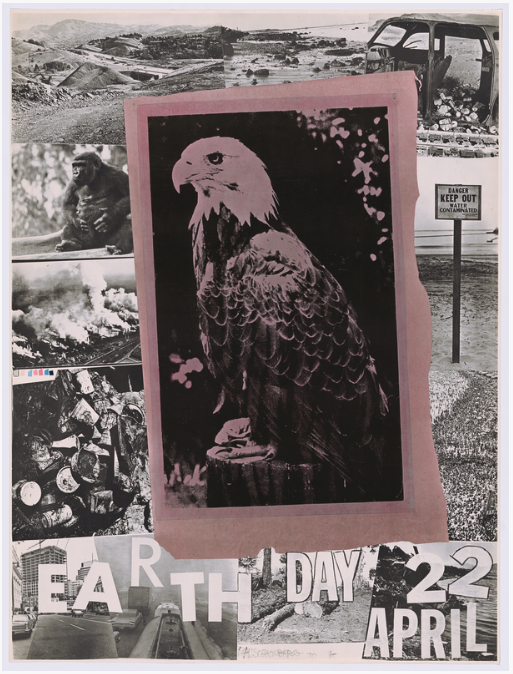
One of the first Earth Day Posters
It began in 1970, when a U.S. senator from Wisconsin, Gaylord Nelson, witnessed the devastating effects of a massive oil spill off the coast of Santa Barbara, California. Inspired to channel the growing energy of student anti-war (Vietnam) protests into environmental action, he helped launch the first Earth Day on April 22, 1970. That day, 20 million Americans took to the streets, parks, and campuses in an eruption of concern that led to the creation of the United States Environmental Protection Agency and landmark environmental laws like the Clean Air Act and Clean Water Act.
But long before Earth Day had a name, the warning signs were already whispering through places like Clear Lake.
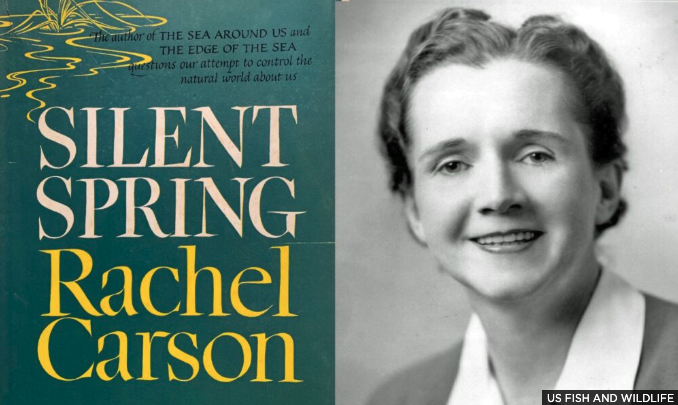
In 1962, marine biologist, writer and one of the founders of the environmental movement, Rachel Carson published Silent Spring, a groundbreaking book that exposed the dangers of pesticide use. Part of her research drew from events right here in the Clear Lake Basin, where pesticide applications intended to control gnats led to a haunting unintended consequence: the decline of Western grebe populations. The birds, once abundant, began to vanish, their eggshells thinning, their numbers quietly collapsing. Carson’s work helped ignite the modern environmental movement, giving voice to what the land and water could not say aloud.
That same spirit echoes in the work CLERC carries forward today.
Stewardship, at its heart, is an act of humility. It recognizes that we are not owners of this land, but caretakers, temporary hands entrusted with something far older and far more intricate than ourselves. At CLERC, stewardship means tending to forests so they can better withstand wildfire, restoring habitats so native species can return and thrive, and paying close attention to the subtle signals ecosystems send before an imbalance becomes a crisis.
Earth Day is not just a moment, it’s a mirror. It reflects both how far we’ve come and how much responsibility still rests with us. The work CLERC facilitates, on the ground and at our desks, season after season, is part of a much longer story. One that was re-realized with concerned voices like Carson’s, gained momentum in the streets on that first Earth Day, and continues in every acre restored, every species protected, and every decision made with the future in mind.
In a world where so much can feel beyond our control, stewardship is something tangible. It is local. It is daily. And it matters.
This Earth Day, we don’t just celebrate the planet, we recommit to it.