The Clear lake Cores Story - Part 2: Unearthing 130,000 Years Beneath Clear Lake
How CLERC is preserving a world-renowned climate record for the future
This story continues from Part 1: Unlocking the Past: How Sediment Cores from Clear Lake Tell the Story of Climate Change and More, where we explored how sediment cores serve as time capsules of Earth’s history. In Part 2, we examine Core 4, the best of the uninterrupted cores recovered from Clear Lake, and how its pollen record reshaped scientists’ understanding of how California’s climate has shifted over the last 130,000 years. Part 3 to come!
A Discovery Beneath the Mud
Fifty years ago, a team of researchers from the U.S. Geological Survey (USGS) and Lake County set out onto Clear Lake with a mission that turned into an unexpected discovery. USGS deployed a core drilling rig into Clear Lake and drilled out eight different cores. Most of the cores were interrupted or unsuccessful but two cores, Core 4 and Core 7 were complete. They were searching for evidence of ancient earthquakes, hoping that a long sediment core might reveal signs of past seismic activity. While they did not find what they were looking for they found something far more extraordinary.
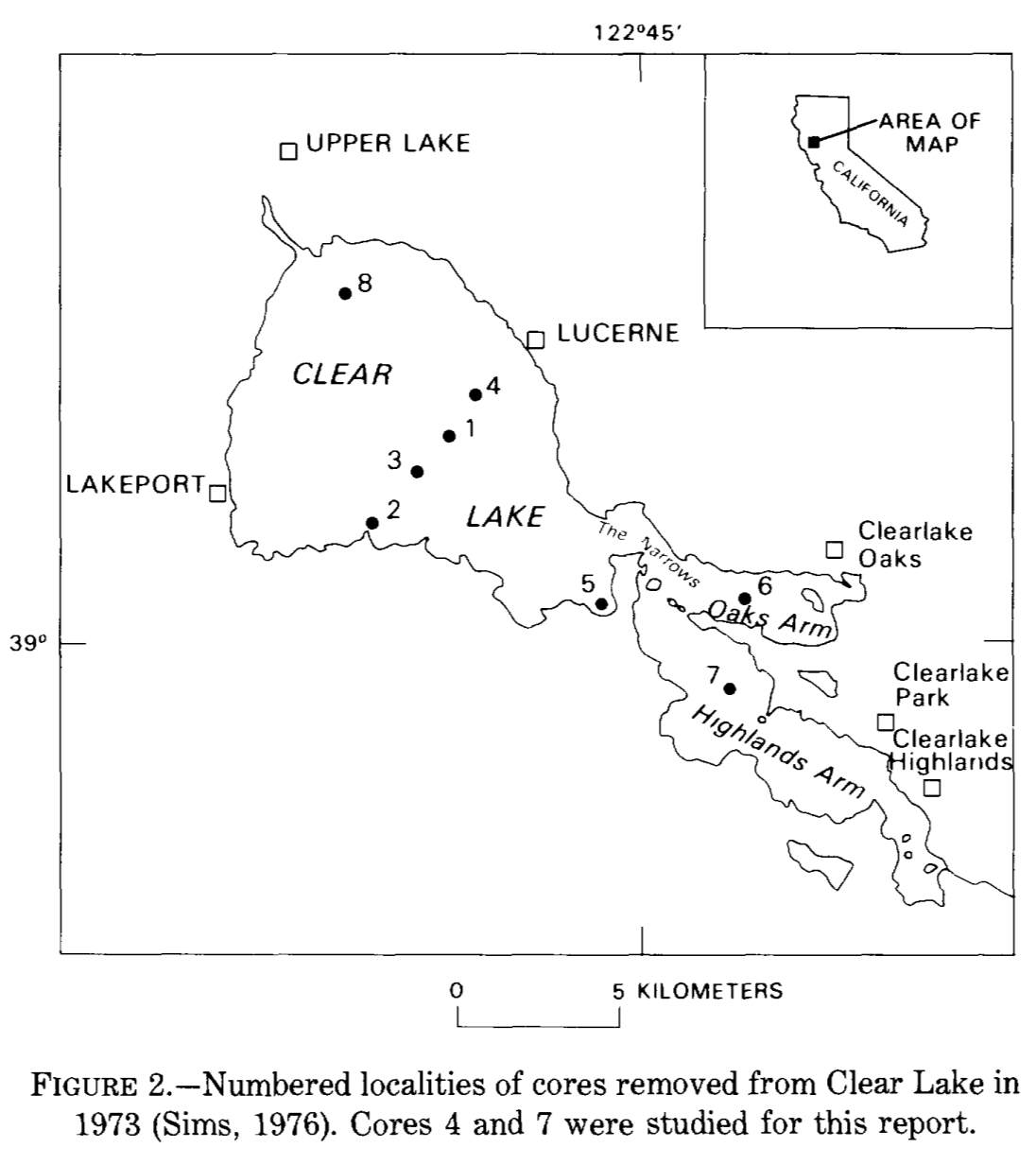
Little did they know Core 4 would change our understanding of the past. That 115-meter column of mud held 130,000 years of pollen, charcoal, and microscopic clues to ancient ecosystems—so exquisitely preserved it seemed the lake had recorded its own memory of time.
The Slow Realization — Serendipity in Science
As the team began examining Core 4, their first step was a method that seemed almost routine: counting pollen grains preserved in each thin layer of mud. Pollen is durable — far more than its delicate appearance suggests — and each plant species leaves behind its own microscopic fingerprint. By identifying which plants dominated each layer, researchers could reconstruct the landscape that once surrounded the lake: forests advancing or retreating, marshes expanding, grasslands shifting with the seasons.
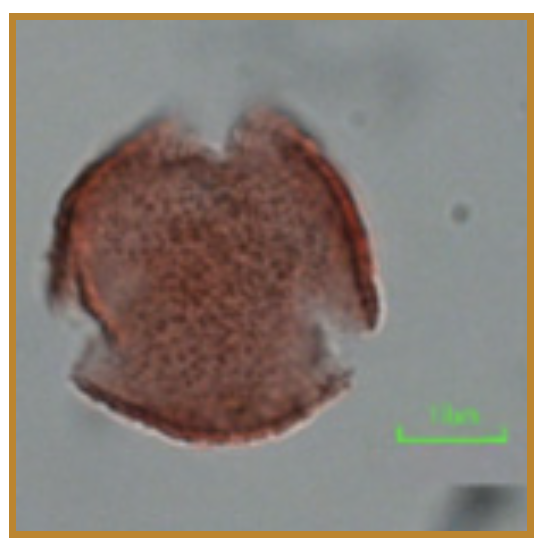
Oak Pollen Grain
What initially felt like a simple ecological catalog soon began to point toward something deeper. Plant communities rise and fall with changes in temperature, rainfall, and seasonal patterns, meaning pollen doesn’t just reveal what grew — it reveals why. The team slowly realized they weren’t just tracing the lake’s natural history; they were glimpsing the environmental forces shaping it.
At the time, no one understood the full significance of what they held. Climate research was still developing in the 1970s, and the idea that a lake could preserve a continuous, datable record of environmental change wasn’t widely recognized. Only later would it become clear that this quiet cylinder of mud carried one of the longest, most complete environmental records ever recovered from a North American lake — a record that would help reshape how scientists understood the region’s past.
A Lake That Remembers
As the pollen results accumulated, Clear Lake revealed its secret:
it had been quietly recording every major climate rhythm of the Northern Hemisphere.
Warm interglacial woodlands.
Expansive conifer forests during glacial advances.
Sudden transitions marking abrupt climate shifts.
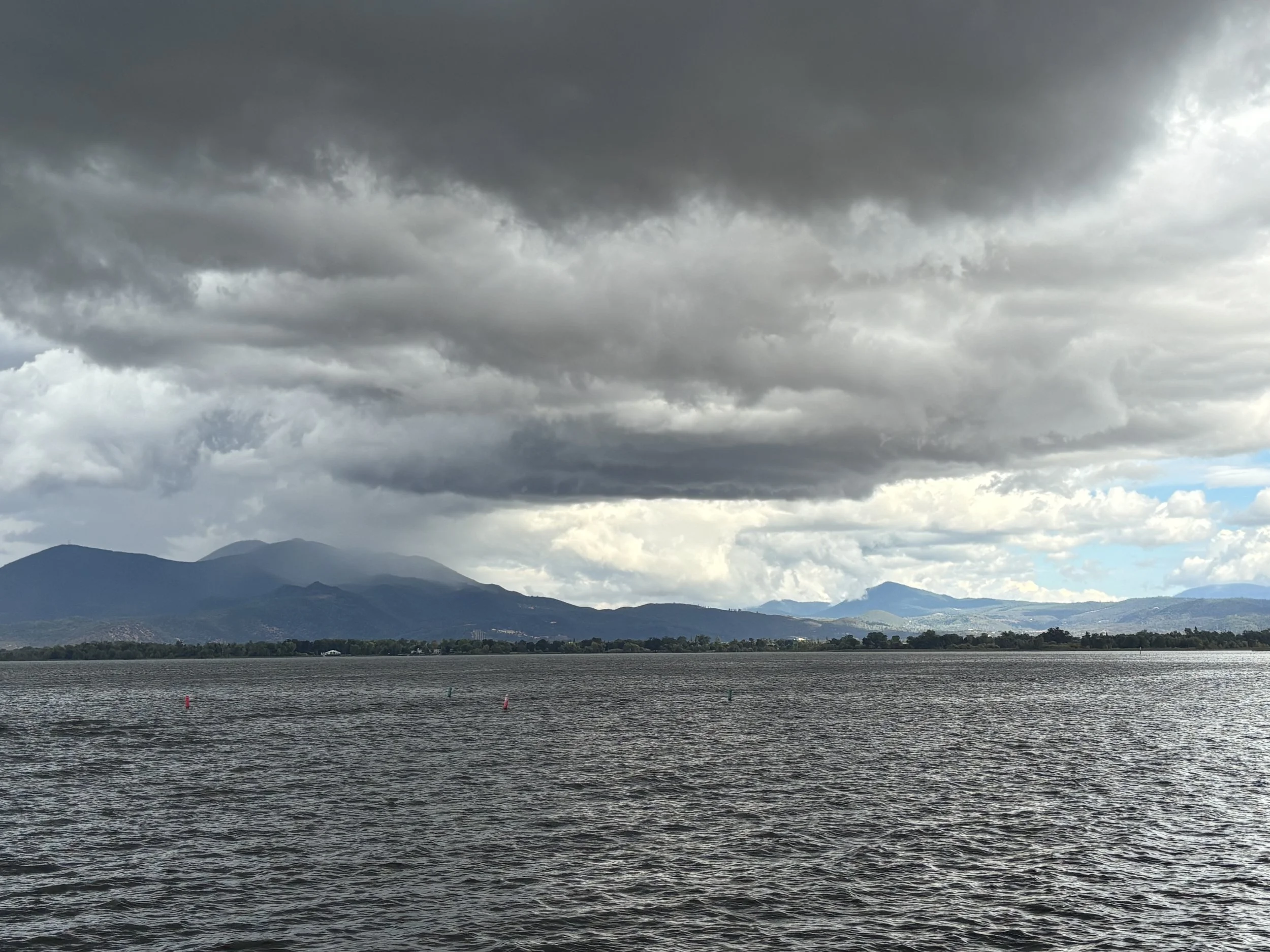
Clear Lake, California - Sept. 10, 2025
The Clear Lake record showed that California’s ecosystems moved in step with global changes — rising and falling with the same patterns seen in European lake records and deep-sea cores. This discovery overturned the long-held belief that California’s climate changed slowly and independently of global processes.
Clear Lake, it turned out, remembers everything.
California’s Connection to Global Climate
Before Core 4, scientists assumed climate changes during the last glacial period were gradual and regional. The pollen from Clear Lake proved otherwise.
It demonstrated:
Climate shifts in California were abrupt, not gradual.
Local changes tracked global glacial–interglacial cycles.
The West Coast responded to the same climate oscillations seen in distant oceans and ice sheets.
This was the first clear evidence that California’s ancient climate mirrored global climatic rhythms. It also challenged the idea that orbital cycles alone explained these shifts. The Clear Lake data hinted that regional hydrology, rainfall patterns, and watershed changes may have played major roles — insights that are still shaping modern research.
A New Understanding of the Past
Core 4 established the first pollen-based record of the Wisconsinan glaciation in California, but it also did something more important:
It showed that supposedly “stable” warm periods like the Sangamonian were actually marked by dramatic oscillations — abrupt warmings, coolings, and ecological reorganizations.
These findings forced climate scientists to reevaluate how ice ages begin and end, and how quickly ecosystems can shift in response.
For the first time, California’s paleoecological history became essential to understanding North American climate dynamics.
CLERC’s Role Today - Protecting a Global treasure
Half a century later, the story of Core 4 is still unfolding.
Many of the original samples, handwritten notes, and materials from the 1973 coring project are now part of CLERC’s research collections. Under the guidance of Dr. David Adam — Research Director, a long-time CLERC board member and key participant in the early Clear Lake studies — CLERC is working on finding resources to:
carefully sort and catalog the original sample sets,
preserve fragile, irreplaceable materials,
digitize handwritten logbooks,
and prepare the collection for modern scientific analysis.
Although Core 4 remains the best climate record for the full last glacial cycle in North America, much of what was observed in the field or recorded on paper has never been analyzed or incorporated into published work.
A major focus of CLERC’s climate adaptation research program is to have these samples cataloged and ready for researchers to continue the exploration of Core 4’s secrets with today’s tools. Once Core 4 is fully understood — including both its strengths and limitations — it will guide the next generation of studies using newer cores and additional climate proxies.
With modern techniques, these samples could help unlock:
long-term climate variability
ancient fire history
hydrologic and watershed changes
ecosystem transitions across glacial–interglacial boundaries
Core 4 still has more to teach us.
Why It Still Matters
The Clear Lake cores remind us that California’s landscapes have endured dramatic environmental shifts before — and that today’s challenges sit within a much bigger historical context.
By preserving this extraordinary archive, CLERC is connecting past and future:
honoring the vision of researchers who worked before digital tools existed,
protecting one of the world’s most detailed climate histories, and
enabling new science that can inform land, water, and wildfire resilience for generations to come.
Clear Lake remembers — and because of CLERC, those memories will continue to guide the science of tomorrow.