
SUPPORTING LAKE COUNTY'S HITCH MONITORING PROGRAM
HELP protect
the clear lake hitch
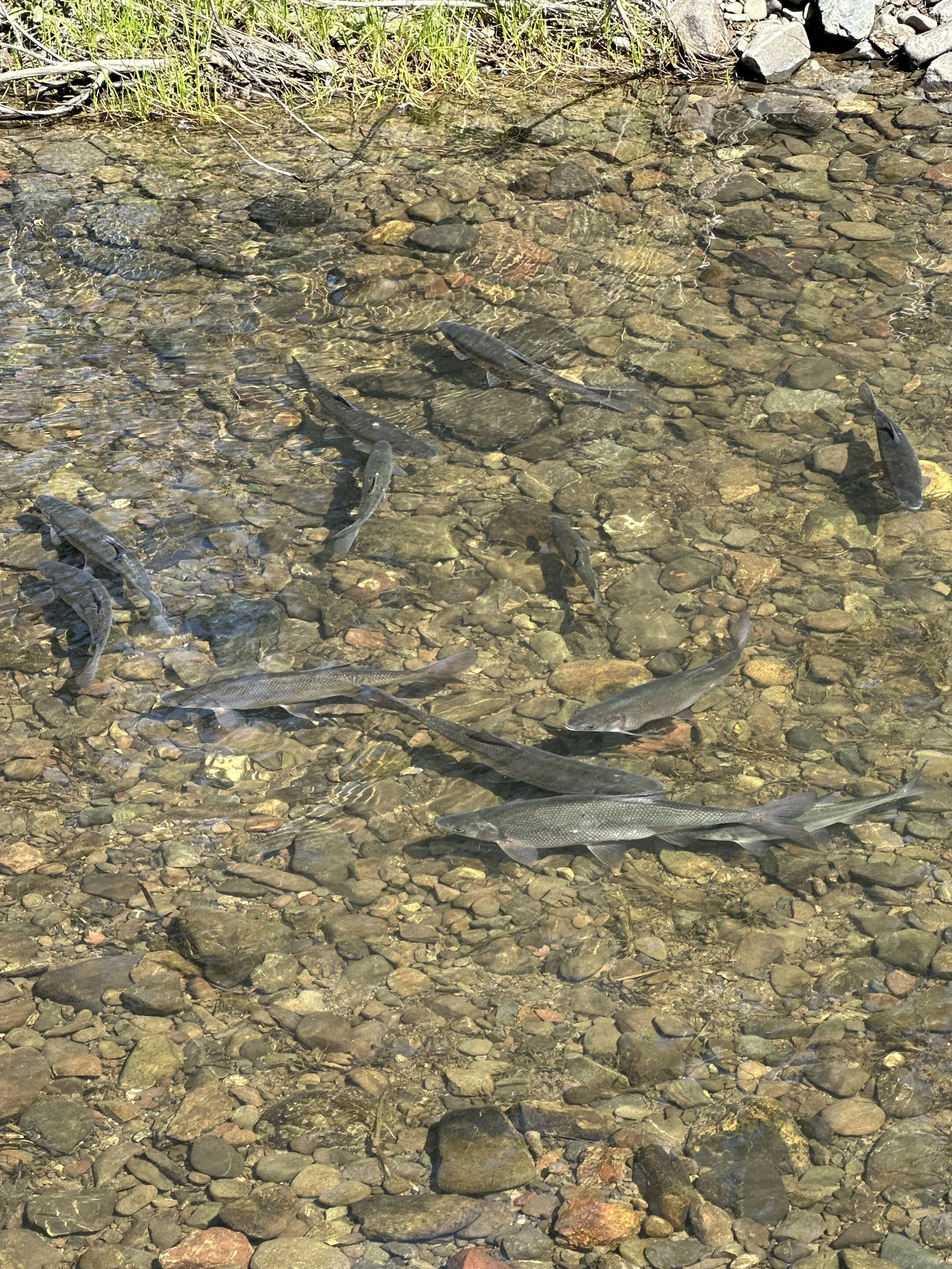
Help protect the Clear Lake hitch, a threatened native fish found nowhere else on Earth, by volunteering with Lake County Water Resources Department’s monitoring program or reporting sightings with CLERC.
Whether you can commit to weekly monitoring or simply share sightings along our local creeks, your observations can help support the future of this remarkable species.
County volunteer applications due January 15, 2027.
TWO WAYS TO PROTECT THE HITCH
Lake County Water Resources Department leads the Clear Lake Hitch Public Observation Survey through its Community Science program. Each spring, trained volunteers survey assigned creek sites weekly to help the County track hitch spawning and population trends. Learn more about the County's program.
CLERC has run its own public hitch observation survey for years, first alongside the Chi Council for the Clear Lake Hitch, giving community members a simple way to report spawning runs around the lake. This season, CLERC is also supporting the County's program by helping spread the word and encouraging observers to attend the County's free trainings.
County Monitoring Volunteers
Make a Weekly Difference
Join Lake County Water Resources Department's Clear Lake Hitch Public Observation Survey and help collect consistent scientific data from assigned sites throughout the watershed.
- Weekly assigned-site surveys for 12 weeks, February 22–May 16.
- Approximately 5 minutes per survey, plus travel.
- One required free training offered by the County.
- Annual county application, plus a free Live Scan for new volunteers.
Application Deadline: January 15, 2027
Email Water Resources to request the 2027 volunteer application: water.resources@lakecountyca.gov.
CLERC Community Observers
Help Whenever You Can
Can't commit to weekly monitoring? You can still make a difference! Report hitch sightings through CLERC's long-running community survey whenever you observe them safely.
- Report through CLERC's own survey, separate from the County's.
- Participate whenever available.
- Attend a free County training to learn the observation methods.
- Share photographs or monitor a favorite location regularly.
No county paperwork, background check, or weekly commitment required!
Want to learn the observation methods? Join one of the free February trainings offered by the County below.
Hitch Monitoring Training
FREE TRAININGS OFFERED BY THE COUNTY
Lake County Water Resources Department is offering two free trainings on hitch identification and survey protocol. Both sessions cover the same material, so choose the one that fits your schedule.
Everyone starts together for an overview of hitch biology and conservation, then county monitoring volunteers and CLERC community observers split into separate groups for survey instruction.
Training is required for county volunteers, and we ask all CLERC community observers to attend as well.
Session 1
9:00–11:30 AM
Lakeport, CA · Lakeport City Hall
Session 2
1:00–3:30 PM
Lakeport, CA · Lakeport City Hall
ABOUT THE CLEAR LAKE HITCH
The Clear Lake hitch is a large native minnow that lives only in the Clear Lake watershed. Each spring, adults leave the lake and swim up local creeks to spawn. Those runs once filled the tributaries with fish. Today they are much smaller, and every observation helps scientists understand why.
Meet the Hitch
Biology
A Fish Found Nowhere Else
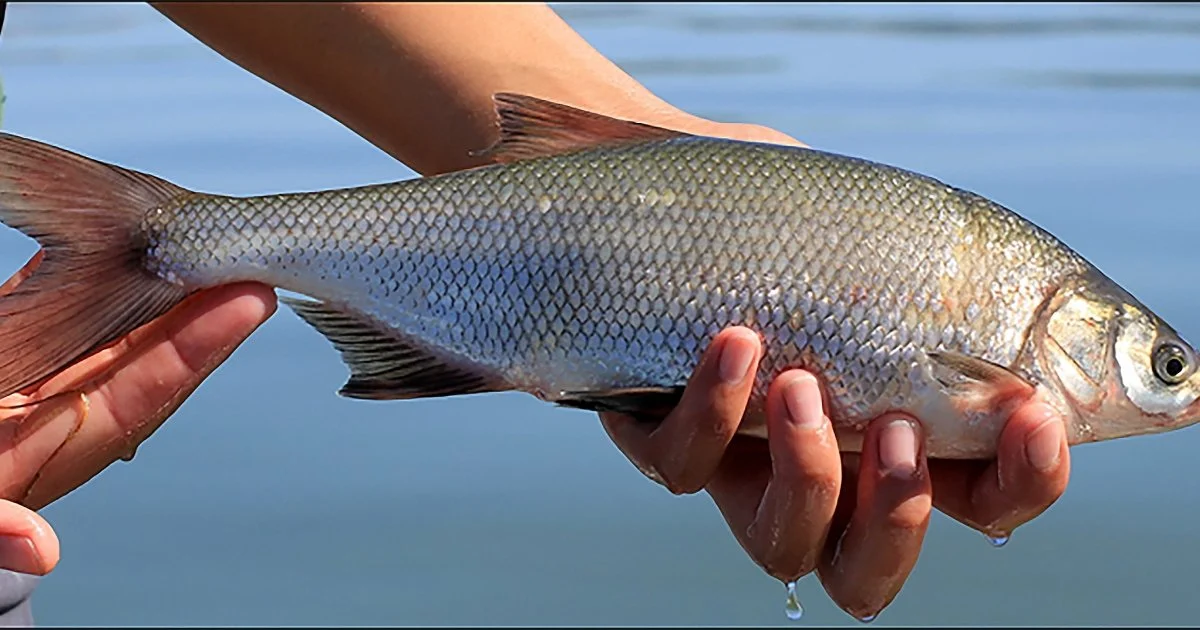
The Clear Lake hitch (Lavinia exilicauda chi) is a minnow subspecies that lives only in Clear Lake and the streams that feed it.
Adults spend most of the year in the lake. From late winter into spring, they swim up local creeks to spawn. Hitch live about six years, so a few seasons of failed spawning can quickly shrink the population.

Culture
Chi and the Pomo People
Pomo communities around Clear Lake call the hitch chi. For generations, the spring runs were a major food source. Families gathered along the creeks to harvest the fish and dry them for use through the year.
Chi remains central to Tribal culture today, and local Tribes have led much of the effort to protect it.
History
From Abundance to Decline
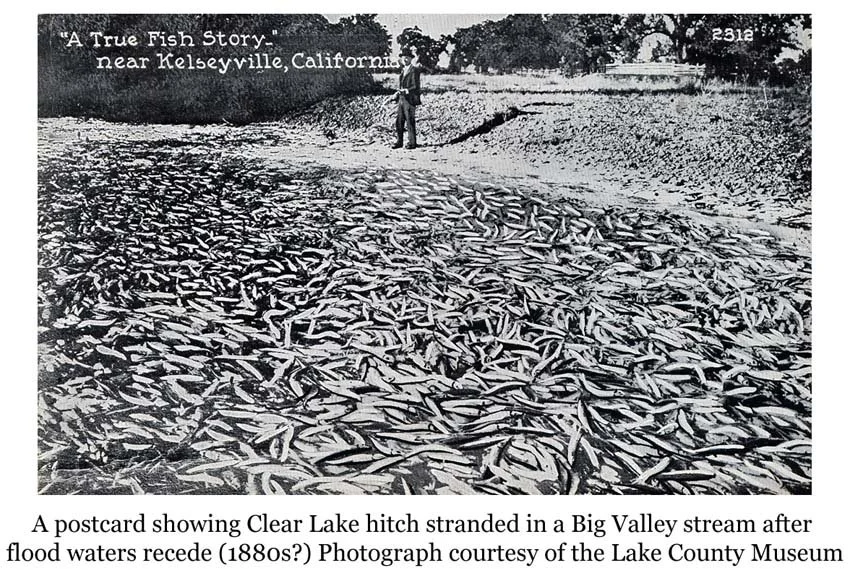
Hitch once ran up Clear Lake's tributaries in such numbers that the creeks overflowed with fish. A postcard from the 1880s shows masses of fish stranded near Kelseyville after floodwaters receded.
Runs that once filled 14 tributaries now reach only a few. Low spring flows, dams and diversions, creek barriers, and introduced fish all likely play a part. Researchers are still working out how much each one matters.
Protection
Why Monitoring Matters
California listed the Clear Lake hitch as threatened in 2014. In January 2025, the U.S. Fish and Wildlife Service proposed federal protection as a threatened species.
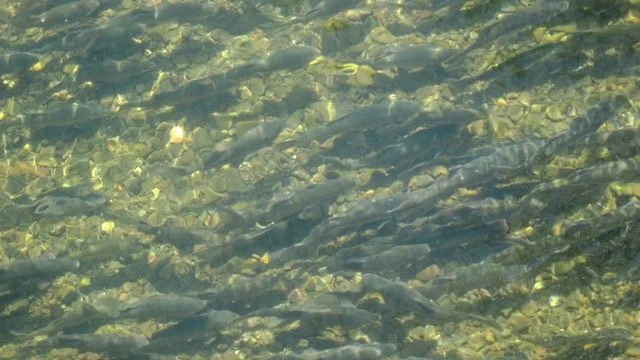
Knowing where and when hitch spawn each year helps guide creek restoration and shows whether it is working. A report of zero fish from a site you deliberately checked is useful data too.
Every hitch report helps, and the most valuable ones come from trained observers. Start with a free County training, or share casual sightings if you can't attend. Hitch can move up local creeks to spawn anytime from January through June.
How to look for hitch
HOW TO OBSERVE AND REPORT
Can't make a training? Basic steps for casual sightings
Casual sightings still help show where hitch are present, but they're less reliable than observations from trained observers. If you report without training, follow these basic steps.
Option 1
Watch from a Bridge
- Park safely, completely off the road.
- Walk quietly to the middle of the bridge.
- Look down into the creek from both sides.
- Estimate how many fish you see. If you see none, your count is zero.
Option 2
Watch from a Creek Bank
- Stay on public land, or get the owner's permission first.
- Pick one spot and watch from there, just as you would from a bridge.
- Use the same spot each time you return.
- Don't walk along the creek adding up fish from different places.
Your Report
What to Record
- Date,time, and weather
- Creek name and where you watched from
- Number of fish seen, including zero
- Notes such as water clarity, or predators like herons, ducks, and ospreys
- A photo, if you can take one safely. Photos help us verify sightings.
During the spawning season, CLERC will be hosting informal monthly gatherings open to anyone curious about the hitch. Come share what you've seen and hear what others are finding around the lake.
Connect with Other Hitch OBSERVERS
COMMUNITY CONNECTIONS
During Spawning Season
Monthly Chi Meetings
Bring your sightings, photos, and questions. Conversations may cover recent observations, hitch science, cultural history, and community stories. CLERC staff will be there to talk with you, and we'll share any guest speakers once they're confirmed.
- Where
- Carnegie Library, 200 Park Street, Lakeport
- Time
- 4:00–5:00 PM
- Dates
- Coming soon. We'll post dates here and on social media.
- Cost
- Free and open to everyone
County volunteers and community observers are welcome. Attendance is always optional.
Spawning Season Updates
Follow Along This Season
From March through May, we'll share recent sightings, photos, hitch facts, and meeting announcements on social media.
County Monitoring Volunteers
How do I become a county monitoring volunteer?
The program is run by Lake County Water Resources. Email water.resources@lakecountyca.gov to request the volunteer application, and return it by January 15, 2027. You can read more on the County's program page.
After that, you'll attend one free training session in February. Lake County Water Resources handles all county volunteer sign-ups, paperwork, and site assignments.
I volunteered last year. Do I need to apply again?
Yes. County paperwork is required every year, so returning volunteers also need to submit the application by January 15. If you already completed a Live Scan for the program, you won't need another one.
What is Live Scan, and how do I schedule it?
Live Scan is a fingerprint-based background check. It's free and required for new county volunteers.
Please don't schedule one on your own. The county arranges Live Scan appointments for volunteers between January 15 and the February training.
What does weekly monitoring involve?
- Visiting your assigned site once a week for 12 weeks, from February 22 to May 16, 2027, ideally on the same day and time each week
- About 5 minutes per survey, plus travel time
- Recording what you see with the county's standardized survey
Lake County Water Resources assigns monitoring sites. Questions about locations can go to water.resources@lakecountyca.gov.
Training
Do I have to attend training?
County monitoring volunteers must attend one session each year. We ask all CLERC community observers to attend as well, so our observations follow the same methods researchers rely on.
Which session should I attend?
These free trainings are offered by the County. Both sessions cover the same material, so choose whichever fits your schedule:
- Wednesday, February 3, 2027, 9:00–11:30 AM
- Tuesday, February 9, 2027, 1:00–3:30 PM
Both take place in Lakeport. We'll announce the venue soon. Training is free.
Does registering for training sign me up as a county volunteer?
No. Training registration and the county application are separate. To become a county monitoring volunteer, you also need to email your completed application to Lake County Water Resources by January 15, 2027.
CLERC Community Observers
Can I report hitch without becoming a county volunteer?
Yes. CLERC community observers report through CLERC's own survey, which is separate from the County's program. There's no county paperwork, background check, or weekly commitment. We ask all observers to attend one of the free trainings offered by the County first.
How often should I report?
Whenever you're able to look. If you'd like to check a favorite creek on a regular schedule, that's welcome too, and repeat visits to the same spot are especially helpful.
How are community observations used?
CLERC community observations go into CLERC's own dataset, which is kept separate from the County's official monitoring data. They help show where and when hitch are spawning around the watershed. Training and photos both help us get the most out of each report.
Should I report if I didn't see any hitch?
Yes, if you deliberately checked a site. Zero counts help show whether hitch numbers are rising or falling over time.
Still Have Questions?
Who should I contact?
County monitoring program, applications, and Live Scan:
Lake County Water Resources, water.resources@lakecountyca.gov
Training registration, community observations, and meetings:
CLERC, info@theclerc.org or 707-261-0008
questions about getting involved
frequently asked questions
Whether you can monitor a site every week or only check a creek now and then, your observations help protect this species. Choose the option that fits you.
READY TO HELP THE HITCH?
County volunteer applications are due January 15, 2027. Request one from water.resources@lakecountyca.gov.